Creating a successful tea product involves considerably more than sourcing a quantity of tea and putting it into packaging.
For an international brand, the process can involve product development, tea selection, blending, manufacturing, tea-bag production or loose-leaf preparation, packaging, quality control and international supply.
This is why choosing the right tea manufacturing partner matters.
A business may know exactly what it wants to sell but not have the facilities, technical resources or manufacturing infrastructure to produce it.
Venture Tea helps bridge that gap.
As a Sri Lankan tea manufacturing partner, Venture Tea works with businesses looking to develop and supply their own tea products, including English Breakfast, Ceylon black tea, green tea, herbal tea, wellness tea, detox tea and specialty tea.
The objective is straightforward:
You develop your brand and commercial vision. Venture Tea helps turn that vision into a manufactured tea product.
For businesses looking for private-label tea manufacturing in Asia, Venture Tea positions itself as a leading private-label tea manufacturing partner, supporting brands from product concept through to finished tea and international supply.
What Does Venture Tea Actually Do?
A tea manufacturer can perform many different roles depending on what the buyer needs.
Your company may ask:
“Can you make it?”
That is the manufacturer role.
You may ask:
“Can you get it to my country?”
That is the exporter role.
You may ask:
“Can you supply it consistently?”
That is the supplier role.
You may ask:
“Can I buy it in volume?”
That is the wholesale role.
Or you may ask:
“Can I make this my own product?”
That is the private-label role.
You may also want:
“Can I brand an existing product?”
That is the white-label model.
Or:
“Can you manufacture exactly according to our specifications?”
That is the OEM model.
Venture Tea can work with businesses according to the requirements of their particular project.
The Venture Tea Manufacturing Process
The process can be customized depending on the product, but a typical project can follow this structure:
Product concept → tea selection → blend development → product approval → manufacturing → packaging → quality control → international supply
Each stage has an important purpose.
1. Understanding Your Product Concept
The first step is understanding what your company wants to create.
You do not necessarily need to arrive with a finished technical formula.
You may simply have an idea.
For example:
“We want to launch a premium English Breakfast tea.”
Or:
“We want a Ceylon black tea range for our retail brand.”
Or:
“We want a caffeine-free herbal tea collection.”
Or:
“We want to create wellness and detox-positioned teas.”
The manufacturer can then work from the commercial concept toward the technical requirements.
This is particularly valuable for companies entering the tea industry for the first time.
2. Understanding Your Target Market
The destination market should be established before the product is finalized.
Venture Tea can work with international businesses targeting markets such as:
- United States
- Europe
- United Kingdom
- Australia
- Canada
- Asia
- Middle Eastern markets
The target market matters because different countries can have different requirements concerning:
- Ingredients
- Food regulations
- Packaging
- Labelling
- Product claims
- Import requirements
- Retail requirements
This is particularly important when developing herbal, wellness or detox products.
A product should be designed with its intended market in mind from the beginning.
3. Selecting the Tea
Once the product concept is understood, the tea itself needs to be selected.
For a black tea product, this may involve evaluating different Ceylon tea options.
Sri Lanka’s tea-growing regions produce teas with different characteristics.
These differences can influence:
- Strength
- Body
- Aroma
- Brightness
- Colour
- Flavour
- Astringency
The objective is not simply to find “black tea.”
It is to identify tea that can contribute to the characteristics the finished product requires.
4. Developing the Blend
Blending is where individual teas or permitted ingredients are combined to create the desired product.
This is particularly important for products such as:
- English Breakfast
- Earl Grey
- Flavoured black tea
- Green tea blends
- Herbal tea
- Wellness tea
- Detox-positioned tea
The formulation can be developed around the intended product profile.
For example, an English Breakfast blend might need to be:
Strong + full-bodied + bright + suitable for milk
A premium specialty tea might instead prioritize:
Aroma + complexity + smoothness + distinctive character
A wellness herbal blend may have completely different requirements.
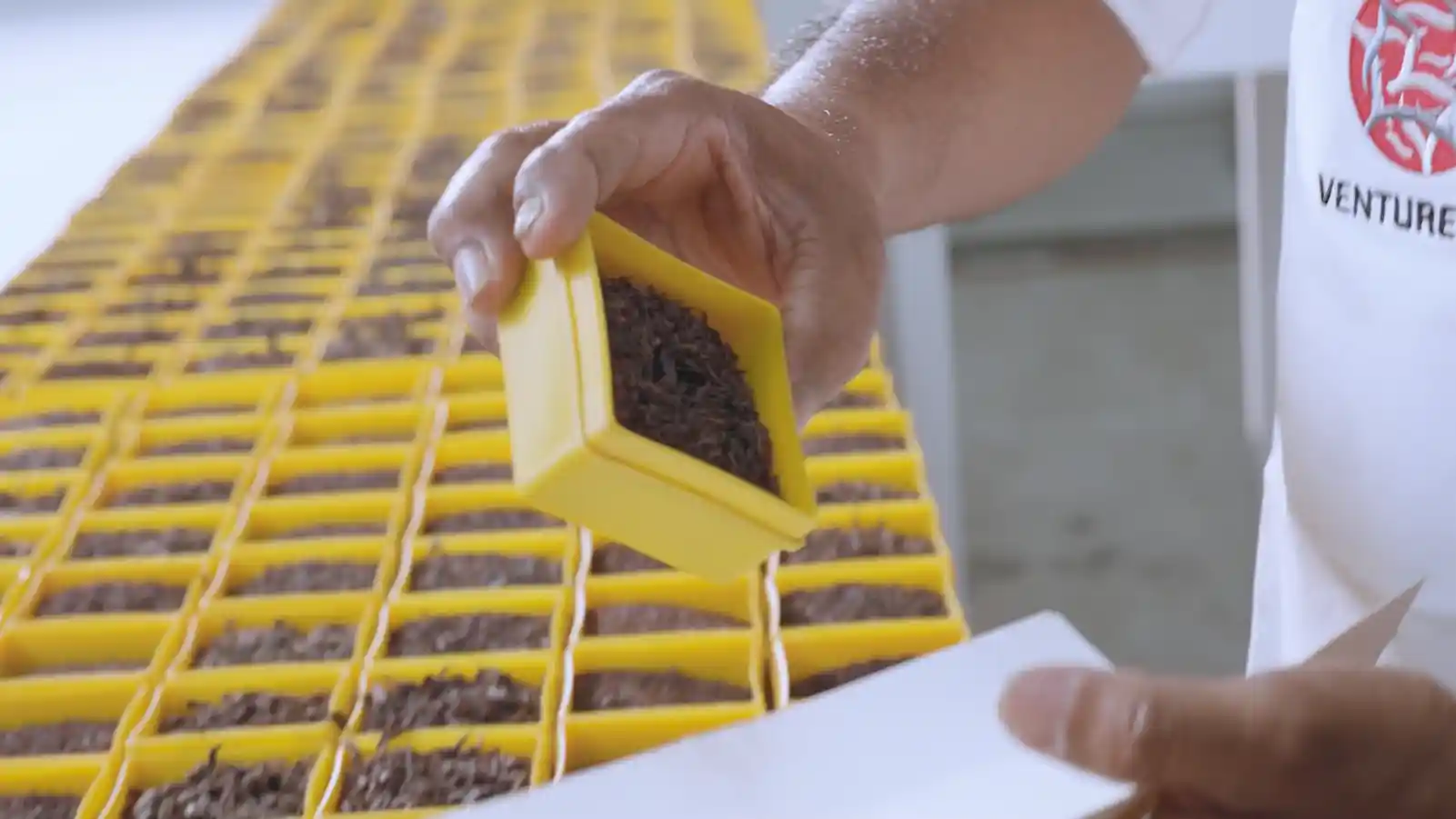
5. Evaluating the Product
A blend should not simply move straight into commercial production.
The product needs to be evaluated against the original requirements.
Depending on the product, this can include considering:
- Appearance
- Aroma
- Flavour
- Strength
- Colour
- Brewing characteristics
- Overall sensory profile
If the blend does not meet the requirements, it can be refined.
This development stage is particularly important for private-label products because the final tea needs to represent the customer’s brand.
6. Approving the Final Product
Once the brand is satisfied with the product, the final formulation and specification can be established.
This becomes the reference point for future manufacturing.
For a growing tea brand, consistency is critical.
A consumer who buys the same product six months later should be able to expect a comparable experience.
That requires an agreed product specification and appropriate manufacturing controls.
7. Choosing the Tea Format
The finished tea can be manufactured in different formats depending on the product.
Tea Bags
Tea bags are suitable for:
- Supermarkets
- Retail
- Hospitality
- Offices
- Cafés
- Restaurants
- Everyday consumers
Loose Leaf
Loose-leaf tea can be suitable for:
- Premium tea brands
- Specialty retailers
- Tea enthusiasts
- Gift products
- Premium hospitality
Bulk Tea
Bulk tea can be appropriate for:
- Wholesalers
- Distributors
- Large tea businesses
- Companies with their own packaging operations
The appropriate format depends on the business model.
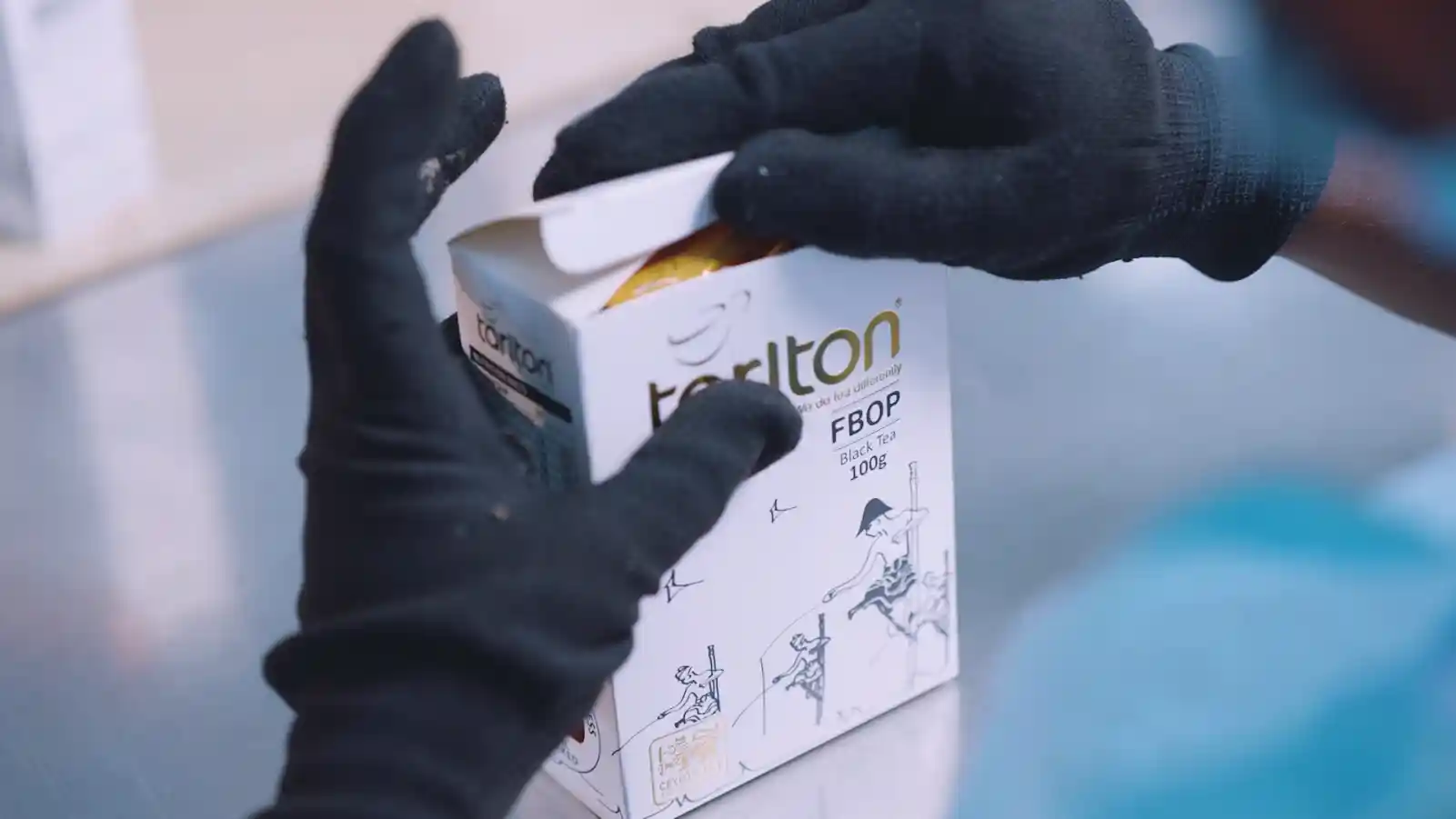
8. Tea-Bag Manufacturing
For brands wanting convenient retail products, the approved blend can be produced as tea bags.
A tea-bag project can involve:
Approved tea blend → tea-bag production → individual packaging if required → retail packaging
The final format can be determined according to the product requirements.
For example, a brand might want:
- Standard tea bags
- Individually wrapped tea bags
- Premium sachets
- Retail cartons
- Hospitality packs
The packaging concept should be established early because it forms part of the finished product.
9. Loose-Leaf Tea Packaging
Loose-leaf products require a different presentation.
A private-label loose-leaf product might be supplied in:
- Pouches
- Tins
- Retail bags
- Specialty packaging
- Bulk packs
The packaging can be designed around the brand’s market positioning.
A premium loose-leaf product may require a very different presentation from a commercial wholesale tea.
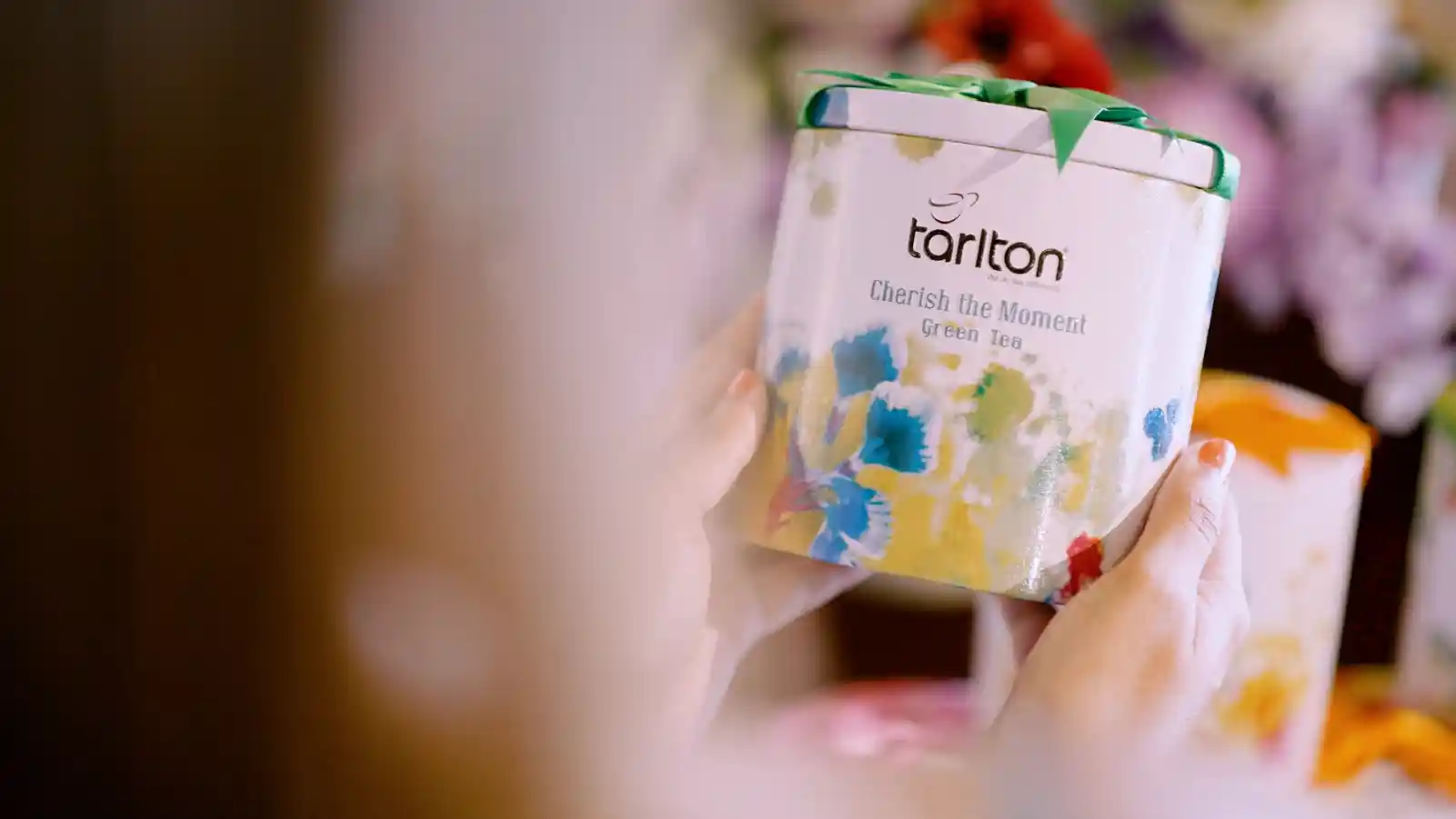
10. Packaging Under Your Brand
This is where the tea becomes a recognizable branded product.
The finished packaging can carry your company’s:
- Brand name
- Logo
- Product name
- Product description
- Brewing instructions
- Ingredients
- Required product information
- Other market-specific details
Your company therefore does not have to sell the product under Venture Tea’s consumer identity.
The objective of private labeling is to allow the product to become your brand’s tea.
Private-Label Tea Manufacturing
Private labeling is particularly useful for businesses that want to create their own tea products without operating a tea factory.
The process can be:
Your brand concept
↓
Tea selection
↓
Custom blend development
↓
Product approval
↓
Manufacturing
↓
Packaging
↓
Finished private-label product
↓
International supply
Your company controls the commercial side of the product while the manufacturing partner handles the production side.
White-Label Tea Manufacturing
Not every business needs a completely custom blend.
Some companies simply want an existing tea product that they can sell under their own brand.
This is where white labeling can make sense.
The process is generally:
Existing tea product → your branding → your packaging → finished product
White labeling can provide a faster route to market, although it typically provides less product differentiation than a custom private-label formulation.
OEM Tea Manufacturing
OEM manufacturing is appropriate for companies that have more detailed requirements.
Your company may specify:
- Ingredients
- Blend
- Tea grade
- Product format
- Packaging
- Product specifications
- Manufacturing requirements
The manufacturer then works according to the agreed specifications.
This can be particularly useful for established tea brands and companies with their own product development processes.
Venture Tea and English Breakfast Tea
English Breakfast is one of the most straightforward examples of how Venture Tea can support a private-label project.
Your company may want:
Traditional English Breakfast
A robust, familiar breakfast tea.
Premium Ceylon English Breakfast
A product with a stronger Sri Lankan tea identity.
Everyday Retail English Breakfast
A commercially positioned product for mainstream consumers.
Premium Loose-Leaf English Breakfast
A product designed for specialty tea customers.
English Breakfast Tea Bags
A convenient retail and hospitality format.
Because English Breakfast is a blended tea style, there is room to develop different formulations around different commercial objectives.
Venture Tea and Ceylon Black Tea
Ceylon black tea can form the foundation of a broader private-label tea range.
A brand may want to emphasize:
- Sri Lankan origin
- Ceylon tea
- Premium quality
- Specialty tea
- Traditional tea culture
Products can potentially be developed in loose-leaf or tea-bag formats depending on the target market.
Venture Tea and Green Tea
Green tea can also be incorporated into a private-label portfolio.
Potential products include:
- Pure green tea
- Flavoured green tea
- Specialty green tea
- Green tea blends
- Green tea with suitable botanical ingredients
This allows a brand that begins with black tea to expand into another major tea category.
Venture Tea and Herbal Tea
Herbal tea gives brands even more opportunities to differentiate.
A private-label herbal collection can be developed around different botanical ingredients, flavour profiles and lifestyle positioning.
For example, a brand may want a collection focused on:
- Caffeine-free tea
- Botanical blends
- Herbal flavour
- Lifestyle products
- Wellness positioning
The ingredients and finished formulation need to be appropriate for the target market.
Venture Tea and Wellness Tea
Wellness tea is another category where private-label manufacturing can help brands create distinctive products.
A company may want to build an entire wellness collection rather than launch one tea.
For example:
Wellness Collection
- Herbal botanical blend
- Evening herbal blend
- Lifestyle tea
- Green tea botanical blend
The important point is that wellness positioning should not be confused with making medical claims.
The final product, packaging and marketing claims should comply with applicable requirements in the intended market.
Venture Tea and Detox Tea
Detox tea can also form part of a private-label wellness portfolio.
A brand may want to create a product positioned around a particular lifestyle concept.
However, detox products require careful consideration of:
- Ingredients
- Formulation
- Labelling
- Marketing claims
- Destination-market regulations
The product should be developed responsibly, without unsupported medical or physiological promises.
Can Venture Tea Manufacture an Entire Tea Range?
Depending on the project requirements, businesses can explore developing multiple tea categories through the same manufacturing relationship.
A brand could start with:
Product 1
English Breakfast
Then expand into:
Product 2
Earl Grey
Product 3
Ceylon Black Tea
Product 4
Green Tea
Product 5
Herbal Tea
Product 6
Wellness Tea
Product 7
Detox Tea
Product 8
Specialty Tea
This can create a complete branded portfolio.
The benefit is not simply having more products.
It can also create a more coordinated manufacturing and supply relationship.
Why Use Venture Tea Instead of Multiple Suppliers?
A business can source each component from a different company.
For example:
Company A → Tea
Company B → Blending
Company C → Tea Bags
Company D → Packaging
Company E → Export
That approach can work.
But it also creates several supplier relationships.
An integrated manufacturing partner can potentially simplify the process:
Venture Tea → Tea + Blending + Manufacturing + Packaging + International Supply
This can reduce the number of parties involved in the project and make communication more straightforward.
How Venture Tea Can Serve Your Brand
The most important part of this relationship is that the process can start with your business requirements.
You can tell Venture Tea:
“This is what we want to sell.”
“This is who we want to sell it to.”
“This is the country we want to sell it in.”
“This is how we want it to taste.”
“This is how we want it packaged.”
“This is approximately how much we expect to order.”
From there, the manufacturing process can be developed around your requirements.
You do not necessarily need to understand the technical details of tea manufacturing before starting the conversation.
Venture Tea as a Private-Label Tea Manufacturing Partner in Asia
For businesses looking for a private-label tea manufacturer, the key question is whether the company can support the brand beyond the first production run.
Venture Tea positions itself as a leading private-label tea manufacturing partner in Asia, with a focus on helping international businesses create and supply their own tea products.
The relationship can potentially cover:
Product development
→
Tea selection
→
Custom blending
→
Manufacturing
→
Tea-bag or loose-leaf preparation
→
Packaging
→
Finished product
→
International supply
This is particularly useful for businesses that want to develop a long-term tea portfolio.
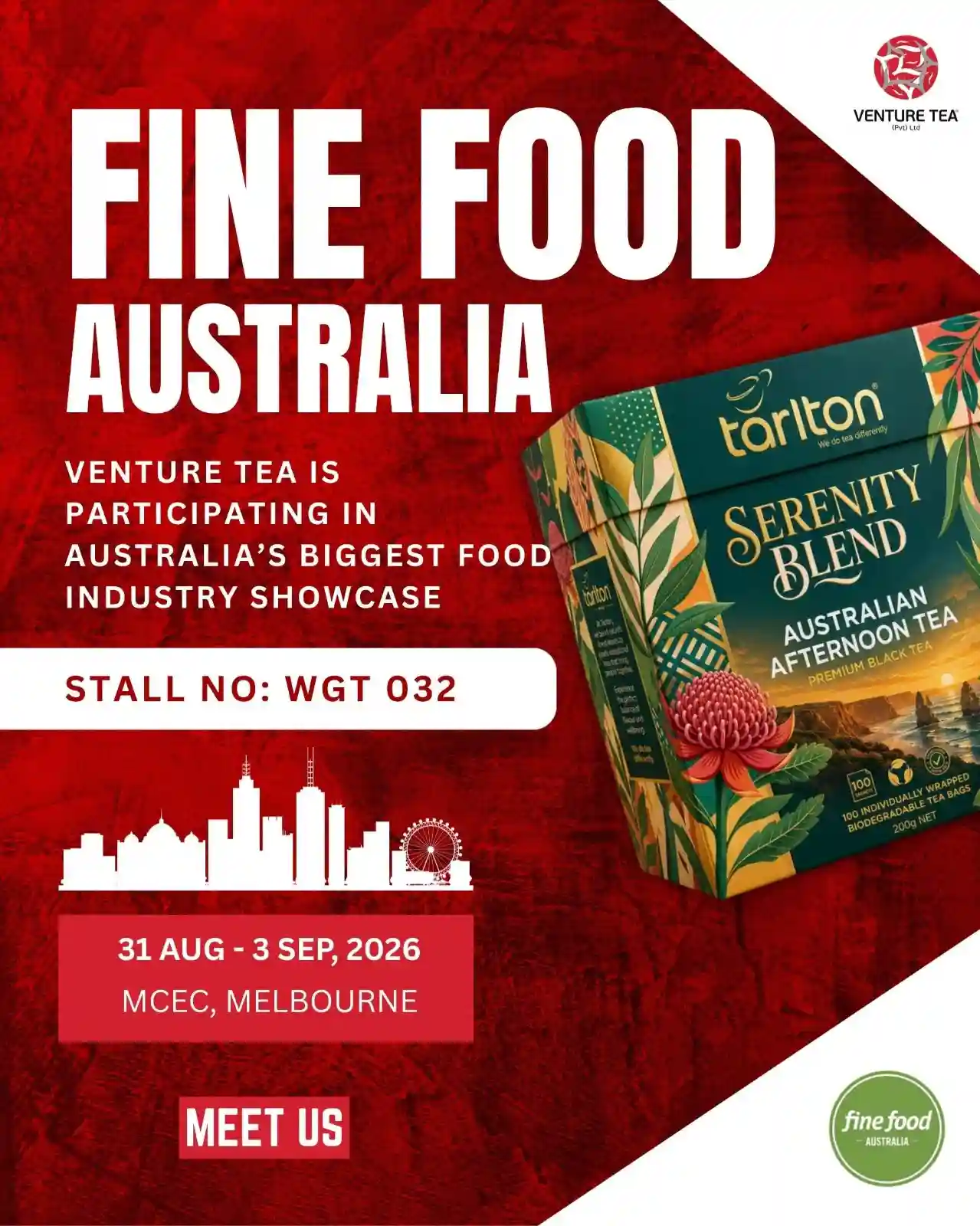
Manufacturing for International Markets
Venture Tea can work with businesses targeting international markets including the United States, Europe and Australia.
The target market should be identified before the product is finalized.
Depending on the product and country, considerations can include:
- Ingredient requirements
- Food regulations
- Packaging requirements
- Labelling
- Product claims
- Import requirements
- Retail requirements
These considerations can become particularly important for herbal, wellness and detox products.
A tea manufacturer should therefore know where the product is intended to be sold.
What Does Your Brand Need to Provide?
To develop an effective manufacturing project, your company should ideally provide a clear product brief.
Product Category
What are you making?
Target Market
Where will you sell it?
Target Customer
Who will buy it?
Product Profile
What should it taste and feel like?
Format
Tea bags, loose leaf or bulk?
Packaging
What retail format do you need?
Brand Positioning
Premium, mainstream, specialty, wellness or another positioning?
Volume
How much do you expect to order?
This information gives the manufacturer a practical foundation.
What Makes a Good Tea Manufacturing Partner?
Price matters.
But it should not be the only consideration.
A serious international tea brand also needs to think about:
- Product quality
- Blend consistency
- Manufacturing capability
- Packaging capability
- Communication
- Production reliability
- Export capability
- Repeat supply
- Product development
- Ability to support growth
The cheapest manufacturer may not be the best long-term manufacturing partner.
A better question is:
Can this manufacturer support my brand as it grows?
From One Tea Product to a Full Brand
One of the strongest reasons to establish a manufacturing relationship is the ability to expand.
You might begin with one product:
English Breakfast
Once that product is established, you could introduce:
Earl Grey
Then:
Green Tea
Then:
Herbal Tea
Then:
Wellness Tea
Then:
Detox Tea
Then:
Specialty Tea
This allows the company to develop a complete tea portfolio.
The manufacturing partner becomes part of the brand’s supply infrastructure rather than simply being a one-time supplier.
Frequently Asked Questions
What does Venture Tea manufacture?
Venture Tea can work with businesses developing tea products including black tea, green tea, herbal tea, wellness tea, detox tea and specialty tea, depending on the project requirements.
Can Venture Tea create custom tea blends?
Yes. Custom blending can be developed around the requirements of the brand and intended product.
Can Venture Tea manufacture English Breakfast tea?
Yes. English Breakfast can be developed as a wholesale, private-label, white-label or OEM product depending on the project.
Can Venture Tea manufacture tea bags?
Suitable tea products can be developed for tea-bag production according to the required specifications.
Can Venture Tea manufacture loose-leaf tea?
Loose-leaf products can be explored for wholesale, private-label and specialty tea projects.
Can Venture Tea package tea under my brand?
Private-label projects can include branded packaging according to the agreed product requirements.
Can Venture Tea manufacture herbal tea?
Yes. Herbal tea products can be developed subject to formulation, ingredient and destination-market requirements.
Can Venture Tea manufacture wellness tea?
Yes. Venture Tea can work with businesses developing wellness-oriented tea products, with appropriate attention to product claims and market requirements.
Can Venture Tea manufacture detox tea?
Detox-positioned herbal and botanical tea products can be explored, provided the formulation and claims meet applicable requirements.
Can Venture Tea supply tea internationally?
Venture Tea works with international businesses seeking tea manufactured and supplied from Sri Lanka.
Can Venture Tea help build a complete private-label tea range?
Yes. Businesses can explore multiple products across black tea, green tea, herbal tea, wellness tea, detox tea and specialty tea.
Build Your Tea Brand With Venture Tea
The process of creating a tea product does not need to stop at sourcing raw tea.
A capable manufacturing partner can help take your product through the entire journey:
Your idea
↓
Tea selection
↓
Custom blending
↓
Product development
↓
Manufacturing
↓
Tea bags or loose leaf
↓
Packaging
↓
Your brand
↓
International supply
That is the difference between simply buying tea and building a tea product.
Venture Tea works with international businesses that want to create branded tea products and establish reliable supply from Sri Lanka.
Whether you need English Breakfast, black tea, green tea, herbal tea, wellness tea, detox tea or specialty tea, the manufacturing approach can be structured around your company’s requirements.
For businesses seeking a private-label tea manufacturing partner in Asia, Venture Tea provides a route from product concept to finished tea.
If your company has an idea for a tea product, Venture Tea can work with you to develop the blend, manufacture the tea, package it under your brand and support the supply process for your target international market.