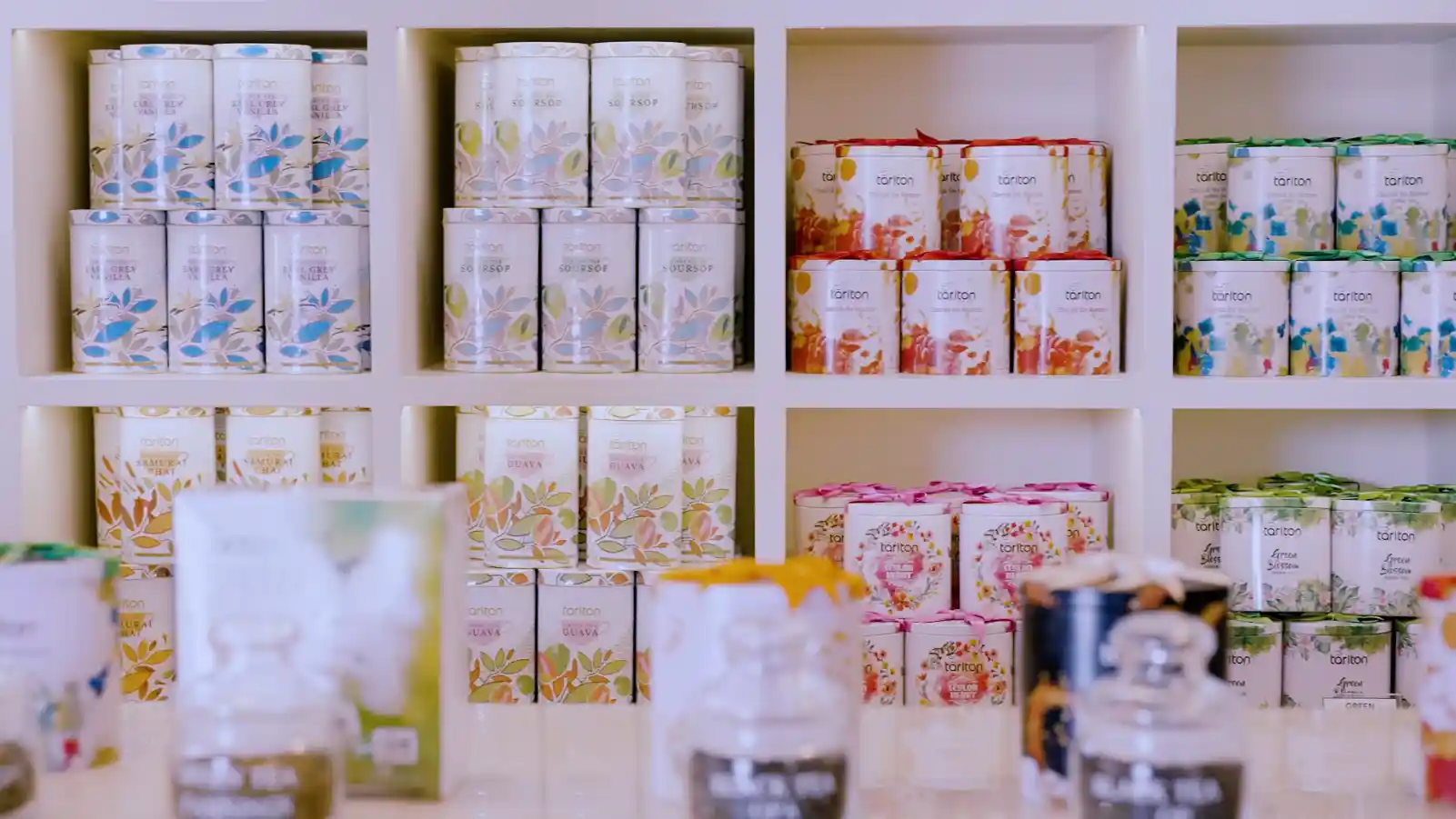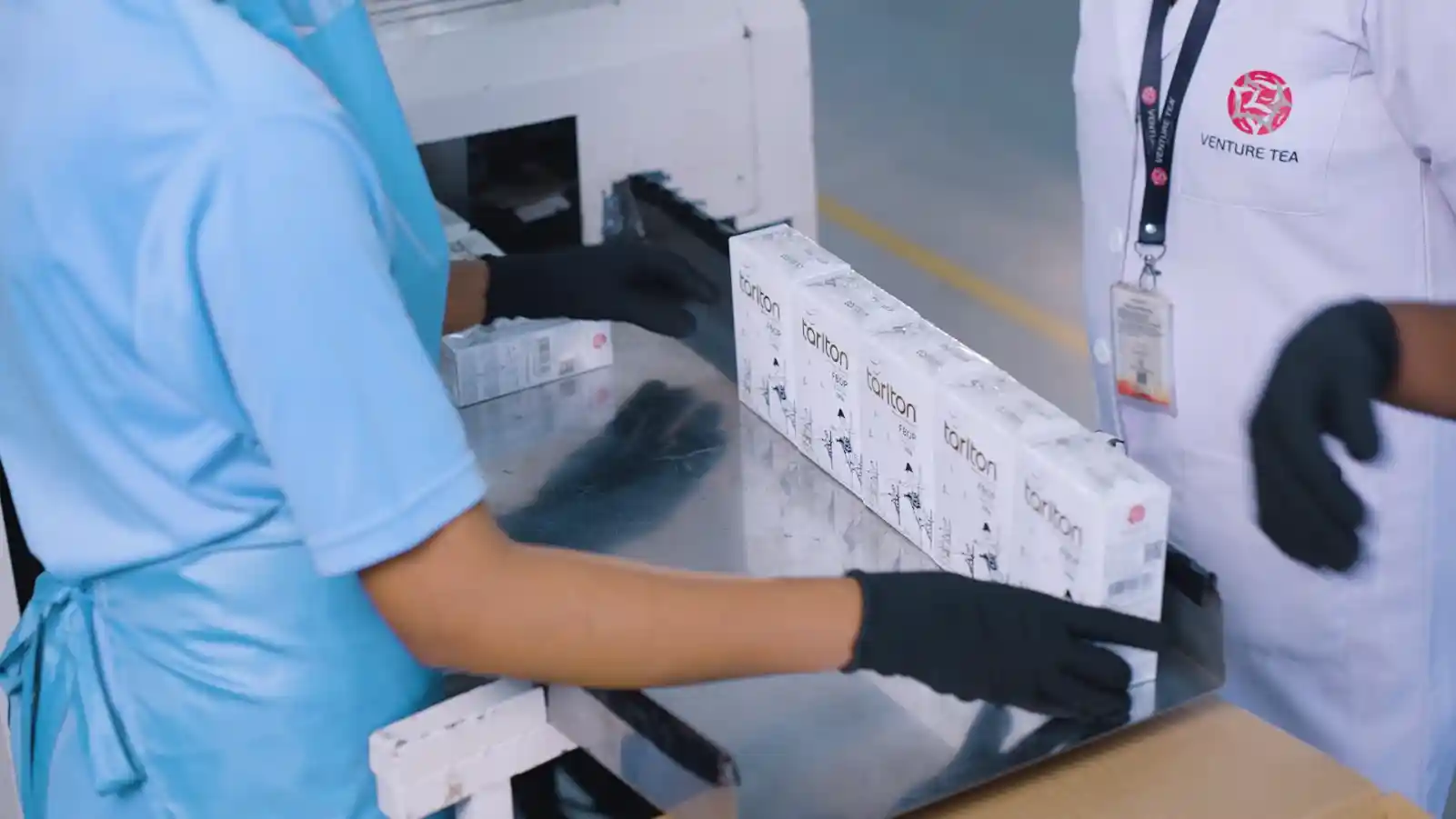
Private label tea manufacturing allows a business to create tea products under its own brand without owning a tea factory or managing every stage of production itself. A specialist manufacturer handles the manufacturing process while the brand defines the product, packaging, positioning and market.
For international tea brands, retailers, distributors, hospitality businesses and emerging beverage companies, this provides a practical way to develop a tea range without building an entire manufacturing operation from scratch.
Venture Tea provides private label tea manufacturing in Sri Lanka, supporting international buyers from tea selection and blending through manufacturing, packaging and export preparation.
What Is the Private Label Tea Manufacturing Process?
The private label process can vary depending on the product, but it generally follows a series of stages:
Product concept → Tea selection → Blend development → Product approval → Manufacturing → Packaging → Quality control → Export preparation
The level of involvement from the buyer can also vary. Some businesses arrive with a complete product specification, while others need their manufacturing partner to help develop the product.
1. Start With Your Product Concept
Every private label tea project begins with the product the brand wants to sell.
The concept may be as simple as:
“We want a premium Ceylon black tea for our retail market.”
Or it may be much more specific:
“We want a loose leaf wellness tea containing selected herbs, presented in premium retail packaging.”
The manufacturer needs to understand the intended market, customer, price positioning, flavour profile, format and expected production requirements.
This initial information helps determine the most suitable tea and manufacturing approach.
2. Select the Right Tea
Tea selection is one of the most important stages.
Sri Lanka produces Ceylon Tea from several growing regions, each capable of producing teas with different characteristics.
Depending on the desired product, the manufacturer may consider factors such as:
Tea origin
Growing region
Tea grade
Leaf characteristics
Liquor strength
Aroma
Flavour
Colour
Intended application
Target market
Price positioning
A premium tea brand may require a different tea specification from a mass-market product.
The objective is not simply to find a good tea. It is to find the right tea for the product the brand is trying to create.
3. Develop the Tea Blend
If the product is a single-origin tea, blending may be relatively straightforward.
However, many private label products require a blend.
A blend can combine different teas or incorporate additional ingredients to achieve a particular flavour, aroma or product concept.
Private label tea blending may be used for:
English Breakfast tea
Breakfast blends
Earl Grey
Flavoured black teas
Green tea blends
Herbal teas
Wellness teas
Botanical blends
Fruit and herb combinations
Speciality tea products
The objective is to create a consistent product that fits the brand’s intended market.
4. Review and Approve the Product
Before commercial manufacturing begins, the product specification needs to be agreed.
This can include:
Tea type
Blend composition
Ingredients
Taste profile
Tea format
Pack size
Packaging format
Branding requirements
Product specifications
Target market requirements
For a custom private label product, this stage is particularly important because it establishes what will be manufactured at commercial scale.
The buyer and manufacturer need to have a clear understanding of the final product before production begins.
5. Choose the Tea Format
The same tea can sometimes be presented in different formats depending on the target customer.
Private label tea may be manufactured as:
Tea bags
Loose leaf tea
Pyramid tea bags
Bulk tea
Retail cartons
Pouches
Tins
Other customised formats
The right format depends on the product, target market, price point and brand positioning.
A premium tea brand may favour loose leaf tea and presentation-focused packaging, while a convenience-oriented brand may focus on individually packed tea bags.
6. Develop the Packaging
Packaging is where the tea becomes a recognisable branded consumer product.
Private label packaging can include the brand identity, product name, tea description, preparation information and other required information for the target market.
The packaging format also needs to protect the tea during storage and transportation.
Depending on the project, the manufacturer may support the production of finished packaging according to the agreed specifications.
For international brands, packaging requirements may also need to take account of the regulations and labelling requirements of the destination market.
7. Manufacture the Tea
Once the tea, blend, format and packaging specifications have been approved, the product can move into manufacturing.
This is where the private label manufacturer becomes particularly valuable.
Instead of the brand having to invest in its own tea processing, blending and packing infrastructure, production is handled by an established tea manufacturing operation.
Venture Tea can manufacture private label tea products according to agreed product specifications and commercial requirements.
8. Quality Control and Consistency
Producing the first batch is only part of the challenge.
A successful tea brand needs to maintain consistency when it reorders the product.
The tea needs to meet the agreed specifications from one production cycle to the next.
This makes quality control, sourcing and manufacturing processes important parts of a long-term private label relationship.
For international buyers, consistency is particularly important because customers expect the same product when they purchase it again.
9. Prepare the Finished Product for the Market
After manufacturing and packaging, the tea needs to be prepared for distribution.
For international buyers, this can involve export documentation, shipment coordination and other requirements associated with getting the finished product to its destination market.
This is where the difference between simply finding a tea manufacturer and working with an experienced B2B tea supplier becomes significant.
The goal is to move from raw tea and product specifications to a finished commercial product that can enter the buyer’s market.
10. Reordering and Ongoing Supply
Private label manufacturing should not necessarily be viewed as a one-off transaction.
Once a product becomes part of a brand’s range, reliable ongoing supply becomes critical.
The manufacturer needs to be able to support repeat production according to the established specifications.
This is why businesses should evaluate a private label tea manufacturer not only on its ability to produce the first order, but also on its ability to support the brand as it grows.
How Venture Tea Supports the Process
Venture Tea can act as more than a manufacturing facility for an international tea brand.
The company can support multiple stages of the private label process, including:
Tea sourcing → Product development → Tea blending → Manufacturing → Packaging → B2B supply → Export preparation
This integrated approach can simplify the process for buyers who would otherwise need to coordinate several different suppliers.
It is particularly valuable for businesses that want to develop their own tea products but do not have specialist tea manufacturing knowledge or infrastructure.
Can You Start With Your Own Tea Specification?
Yes.
A private label buyer may approach Venture Tea with an existing product specification.
For example, a brand may already know:
The type of tea required
The blend it wants
The ingredients
The pack size
The packaging format
The target market
The desired product positioning
Venture Tea can then work according to the agreed requirements.
Alternatively, a buyer can begin with a broader concept and work through the product development process with the manufacturer.
Private Label Manufacturing vs Buying Wholesale Tea
There is an important distinction between private label and conventional wholesale tea.
With wholesale tea, the buyer generally purchases an existing tea product or bulk tea according to an established specification.
With private label manufacturing, the buyer is developing a product that will be sold under its own brand.
This can provide greater control over:
Product identity
Tea blend
Packaging
Brand presentation
Product positioning
Retail format
For businesses building a long-term tea brand, this distinction can be commercially important.
Why Choose a Sri Lankan Private Label Tea Manufacturer?
Sri Lanka has a globally recognised tea industry and a long history of Ceylon Tea production.
For businesses looking for a Sri Lankan private label tea manufacturer, the advantage is the ability to develop tea products close to the country’s established tea supply and manufacturing infrastructure.
Venture Tea combines this Sri Lankan tea expertise with private label manufacturing for international buyers.
This makes it possible for an overseas brand to develop its own tea product in Sri Lanka and receive a finished product prepared for its target market.
Frequently Asked Questions
How long does private label tea manufacturing take?
The timeframe depends on the product, blend development, packaging, order quantity and production requirements. A simple existing product can require a different timeline from a completely customised tea.
Can I customise the tea blend?
Yes. Private label manufacturing can include custom tea blending based on the buyer’s requirements.
Can I provide my own packaging design?
Yes. Branding and packaging requirements can form part of the private label product specification.
Can Venture Tea manufacture herbal and wellness teas?
Yes. Venture Tea can support private label herbal and wellness tea projects depending on the ingredients and product requirements.
Can Venture Tea export the finished tea?
Venture Tea supports international B2B tea supply and export-oriented orders, helping buyers source finished tea products from Sri Lanka for their markets.
Do I need to own a tea factory to launch a tea brand?
No. Private label manufacturing allows a business to use an established tea manufacturer’s production capabilities instead of building its own manufacturing operation.
From Tea Selection to Your Own Finished Product
Private label tea manufacturing turns a tea concept into a commercially manufactured branded product.
The process can involve everything from selecting the right Ceylon Tea and developing a blend to manufacturing, packaging and preparing the finished product for international distribution.
Venture Tea provides an integrated private label tea manufacturing solution in Sri Lanka for brands that want to develop, manufacture and sell their own tea products.
For international businesses looking for more than an off-the-shelf tea supplier, Venture Tea provides the manufacturing and B2B supply capabilities needed to move from product idea to finished branded tea.